
136 — Reframe Web, Native, Headless, and Audio Runtime Boundary
Reframe has one governed runtime model and multiple clients. Linux headless owns Store, MIDI2, scenarios, and receipts; web and native iPad/macOS clients project that model. Interactive audio renders at the user device.
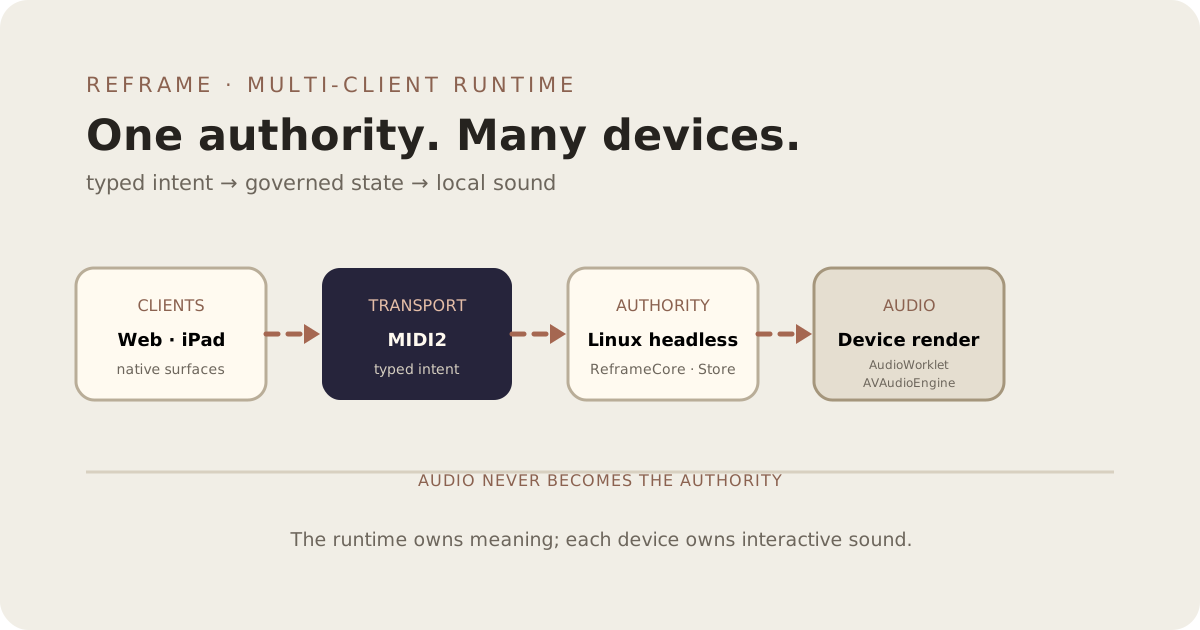
Principal illustration — one semantic authority with many client surfaces. It describes the governed runtime boundary; it is not a live Store receipt, transport trace, or audio-stream measurement.
The decision
Reframe is a multi-client product. The web client is the natural SaaS surface and native iPad remains a first-class creative host. Neither client becomes a semantic authority. ReframeCore, MIDI2, and FountainStore remain the shared spine.
web / iPad / macOS → typed MIDI2 gateway → headless ReframeCore on Linux → FountainStoreAudio boundary
Interactive instruments render locally: Web Audio with AudioWorklet/WebAssembly in the web client, and AVAudioEngine/Audio Units on iPad. The server transports typed MIDI2 intent, parameter state, timing, and instrument assets. It does not stream every audio sample for local interaction.
WebRTC may carry rendered audio for monitoring or ensemble playback, but never replaces MIDI2 or FountainStore authority. Audio callbacks cannot access Store, networks, models, or semantic reasoning.
Rules
- ReframeCore is one semantic runtime shared by web, iPad, macOS, and Linux headless hosts.
- The web client is a first-class SaaS client, not a parallel command authority.
- Native iPad is a first-class creative and performance client.
- Linux headless Reframe owns Store, MIDI2, scenarios, leases, receipts, and service operations.
- Interactive audio renders on the user device; the server transports intent, state, assets, and synchronization.
- Web Audio/AudioWorklet/WASM and AVAudioEngine/AudioUnit may differ while preserving instrument identity and event semantics.
- WebRTC is optional rendered-audio transport and never replaces MIDI2 or FountainStore.
- Client, runtime, audio, and SaaS claims require separate typed acceptance evidence.
Governing sentence
One Reframe runtime may have many faces: let Linux hold governed state, let web and native clients meet the writer where they are, and let each device render interactive sound without moving authority into the audio stream.